
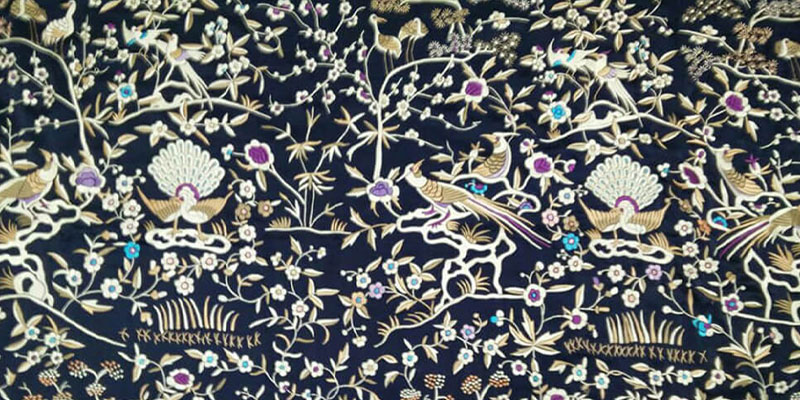
The Gara embroidery is a by product of the silk trade between China and the Persians in India. Parsi garas was introduced to Bombay by Sir. Jamsetjee Jeejeeboy, who brought back samples of Chinese embroidered silk from his journey to Canton. Parsi Zoroastrian textiles woven with self design was greatly influenced by various cultures from Persia, China, India, and Europe.The basic fabric used in the making of the gara was pure Sali Gaaj, Jacquard crepe, Gaaj satin. As Parsis are nature worshippers most of the inspiration is taken from nature in the form of flowers, birds, creatures, birds, trees, Pagodas as well as scenes from their daily life which is also depicted in their textiles.
These textiles were only woven on handlooms in the industrial city of Surat, in Gujarat. Due to Industrialization during the 1970’s all the handlooms were replaced by power looms and the weavers were jobless due to which the art of weaving this fabric is now lost forever. When a Parsi girl marries, even today there are 2 items that will mostly be a part of the trousseau, A gara saree and a Real Zari border, these are heirlooms passed down through generations and are considered collector’s item. A Gara is the symbol of the living heritage of the Parsi Community.